After Dark on Two Wheels: The Birmingham Night Riders Lighting Up the City's Safety Debate
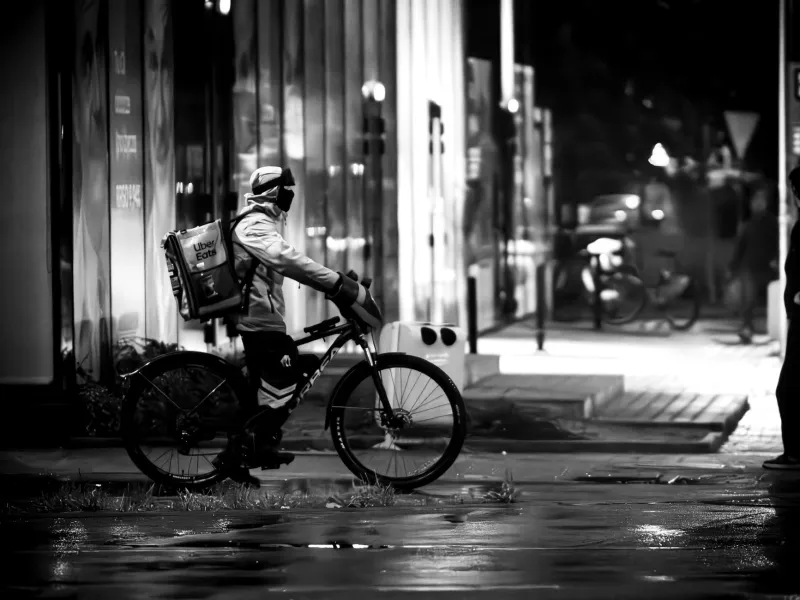
It's half ten on a Tuesday evening on the Pershore Road, and Dani is doing what she does four nights a week: threading her way home from a late shift at a city-centre restaurant, lit up like a Christmas tree on wheels. Two front lights, a rear flasher, reflective ankle bands, a high-vis gilet, and a helmet-mounted torch that swings with her head. She doesn't look like someone who's nervous about cycling in the dark. She looks like someone who has thought very hard about it.
"People think night riding is dangerous," she says, pulling up at a red light on Balsall Heath Road. "But honestly? Once you sort your kit and know your routes, it's almost calmer than daytime. Less traffic. Less aggro. Just you and the road."
Dani is part of a quietly expanding demographic in Birmingham — the night shift cyclists. They're warehouse workers, nurses, hospitality staff, and shift supervisors. They're students cycling home from libraries. They're parents doing a late supermarket run. And increasingly, they're a community unto themselves, sharing route knowledge, gear recommendations, and a particular brand of hard-won confidence that daylight riders rarely develop.
Who's Actually Out There?
There's no official count of how many Brummies are cycling after dark, but the anecdotal evidence from local cycling groups is hard to ignore. Several Birmingham-based Strava clubs have noted a marked uptick in evening and night activity over the past two years, particularly among members who commute outside standard office hours. Shifts in the city's economy — more hospitality, more logistics, more healthcare demand — have put more people on bikes at hours when the roads are quieter but the risks feel different.
What's interesting is how this community has largely organised itself without any formal support. There's no "Birmingham Night Riders" club with a kit and a committee. Instead, it's informal — WhatsApp threads, Reddit threads in r/bham, word of mouth at workplaces. Someone mentions they cycle home after a late shift. Someone else asks what lights they use. A conversation starts. Routes get shared. Gear gets compared.
That grassroots knowledge-sharing is filling a gap that neither the council nor mainstream cycling advocacy has properly addressed.
The Kit That Actually Matters
Ask any experienced night rider in Birmingham what the single biggest upgrade they've made is, and the answer is almost always the same: lights. Proper lights, not the token blinky LEDs that come bundled with a cheap bike.
The consensus among the community seems to land around front lights in the 600–1,000 lumen range for urban riding — bright enough to illuminate unlit stretches of towpath or poorly-lit side streets, without blinding oncoming cyclists or pedestrians. Brands like Exposure, Lezyne, and Knog come up repeatedly in local forums. For rear visibility, multiple lights rather than one are considered standard practice — a steady beam combined with a peripheral flasher to catch drivers' eyes from angles.
But it's the reflective gear conversation that's perhaps most revealing. High-vis jackets have been a cycling staple forever, but night riders are increasingly moving towards reflective rather than simply fluorescent kit. The distinction matters: fluorescent colours are brilliant in daylight and at dusk, but in true darkness, without ambient light to activate them, they're largely useless. Retroreflective materials — the kind that bounce headlights back directly at their source — are what actually work at 11pm on an unlit stretch of the Stratford Road.
Reflective ankle and leg bands are considered near-essential, because moving limbs catch drivers' attention far more effectively than a static torso. Helmet covers, spoke reflectors, and even reflective bar tape are all part of the toolkit that serious night riders have assembled through trial, error, and the occasional close call.
The Infrastructure Problem Nobody Wants to Talk About
Here's the uncomfortable truth that night cyclists in Birmingham will tell you, once they trust you enough to say it plainly: the city's street lighting is a patchwork disaster.
Birmingham City Council has, like many local authorities, undertaken significant street lighting reduction programmes in recent years — dimming or switching off lights in residential areas during late-night hours as part of energy-saving measures. For car drivers, this is a minor inconvenience. For cyclists, particularly those on routes that mix main roads with residential cut-throughs, it can mean navigating stretches of genuine darkness on roads with no dedicated cycling infrastructure.
Several night riders we spoke to had independently mapped their own "lit routes" — longer alternatives to their most direct paths, chosen specifically because they stay on better-lit main roads even when quieter back streets would save five minutes. It's a rational adaptation, but it's also a damning indictment of how cycling infrastructure planning rarely accounts for the reality of non-standard commuting hours.
"The cycling routes that look great on TfWM maps assume you can see where you're going," says Marcus, who cycles from Erdington to Digbeth three nights a week. "Some of those signed routes go through areas where the lighting is basically nonexistent after midnight. You're on your own."
Advocacy groups have begun picking up this thread. Birmingham Cycling Campaign has raised street lighting as a cycling safety issue in consultations, though progress has been slow. Night riders, for their part, are increasingly vocal in local forums about naming specific junctions and stretches where lighting failures create genuine hazards.
The Culture of the Dark Hours
Beyond the practical, there's something genuinely distinctive about the culture that's grown up around night riding in Birmingham. There's a nod — sometimes literal, sometimes metaphorical — between cyclists who encounter each other on the same late routes. A recognition that you're both part of a small, self-selecting group who've decided that the darkness isn't a reason to stop.
There's also a particular relationship with the city itself. Birmingham after midnight is a different place. The canal network, often busy with joggers and dog walkers during the day, becomes a private corridor. The main arterials, clogged and aggressive at rush hour, thin out to something almost manageable. Night riders talk about the city with a possessiveness that's quite distinct from daytime cycling — it's theirs in a way it isn't during the hours when everyone else wants it.
That sense of ownership is starting to translate into advocacy. Night riders are showing up to consultation meetings and making the case that cycling infrastructure needs to work at all hours, not just during the commuter peaks that dominate transport planning assumptions.
What Needs to Change
The asks aren't particularly radical. Better maintenance of street lighting on signed cycling routes. Reflective road markings on key junctions. Consultation processes that specifically ask about non-standard commuting hours. These are incremental improvements, not grand visions.
But they require planners and politicians to acknowledge that cycling in Birmingham isn't just a daytime, fair-weather, leisure activity. It's how a significant and growing number of people get to work and back, in all conditions, at all hours.
Dani, heading south on the Pershore Road with her constellation of lights, puts it simply: "I'm not asking for anything special. I just want the roads to work for me the same way they work for someone in a car at night. That's not too much to ask."
It isn't. And the night shift cyclists are making sure that argument gets heard, one lit-up commute at a time.