From Club Runs to Podiums: How Birmingham Is Building a Competitive Cycling Scene Worth Taking Seriously
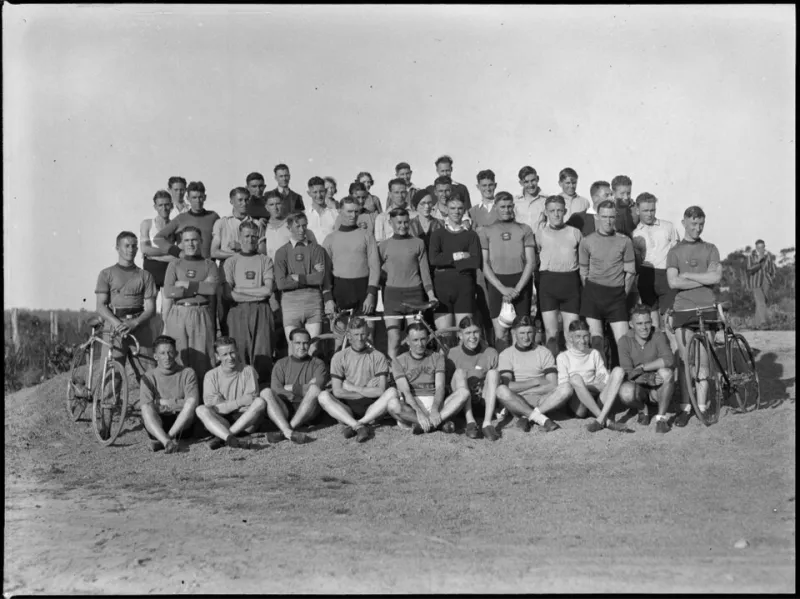
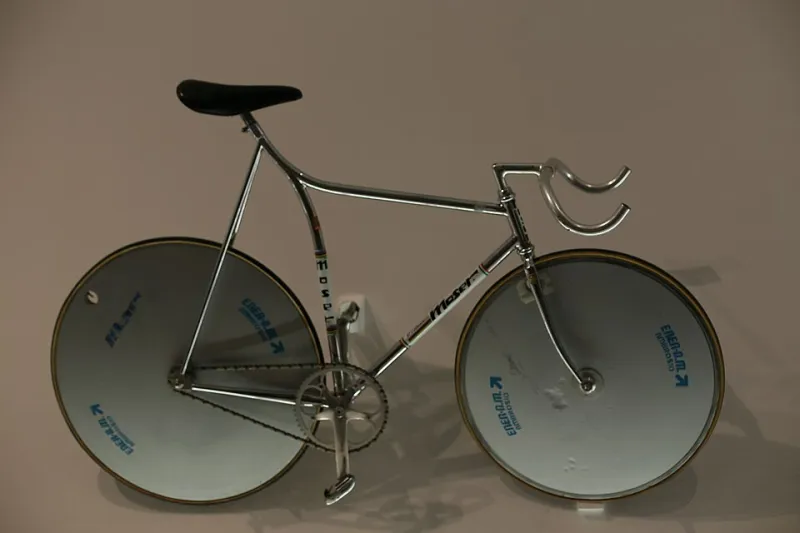
Photo: Powerhouse Museum from Sydney, Australia, Public domain, via Wikimedia Commons
For years, the story of competitive cycling in the UK has been told through a fairly narrow geography. London. Manchester. The Yorkshire heartlands. If you were a young rider in Birmingham with genuine ambitions — the kind that stretched beyond a sportive finish line or a Strava segment — the unspoken assumption was that you'd eventually have to leave. Pack your kit, find a flat in a city with better infrastructure, better clubs, better connections. The Second City, for all its grit and ambition, just wasn't quite the place.
That narrative is changing. Quietly, determinedly, and with the sort of grassroots stubbornness that Birmingham does rather well, a competitive cycling community is taking shape here. It's being built not by governing bodies handing down funding from on high, but by coaches giving up their evenings, volunteers who've turned club secretarial duties into a second job, and riders who simply refused to accept that ambition had a postcode.
The Clubs Driving It Forward
Birmingham has always had cycling clubs — that much isn't new. But what's shifted in recent years is the seriousness of purpose within those clubs. Organisations like Midland CC, Velo Club Birmingham, and a cluster of newer collectives have begun building structured development programmes rather than just organising weekly chain-gang sessions and hoping talent emerges.
Coach availability has been a genuine turning point. Several clubs now have British Cycling-qualified coaches running regular sessions, something that was patchy at best a decade ago. The difference it makes to a junior rider or a returning cyclist trying to understand training load, race tactics, or pacing strategy is enormous. You're no longer just riding hard and hoping for the best — you're learning a craft.
Track cycling has been a particular area of growth. Whilst Birmingham doesn't have its own velodrome — a sore point that gets raised at every cycling advocacy meeting in the city — organised travel to facilities like the Lee Valley VeloPark in London has become a genuine feature of the calendar for several clubs. It's not ideal, and the cost and time involved puts it beyond reach for some riders, but the fact that Birmingham cyclists are making that journey regularly, competing, and coming home with results speaks to a determination that's hard not to admire.
Mountain Biking's Quiet Revolution
Road racing tends to grab the headlines, but some of the most interesting competitive development happening in Birmingham right now is in mountain biking. The city's proximity to the Cannock Chase trail centre — one of the UK's premier off-road venues — has helped foster a generation of technically skilled riders who are now filtering into competitive enduro and cross-country racing.
Several informal MTB collectives have emerged around the city, some born out of social media groups, others from chance meetings on trail centres. What's notable is how quickly these groups have evolved from social riding outfits into something with genuine competitive intent. Riders are entering regional XC races, podiuming at enduro events, and starting to represent Birmingham in a sport where the city had almost no visible presence five years ago.
The coaching culture is slightly different here — less structured, more peer-to-peer — but the knowledge-sharing is real. Experienced riders mentoring newer ones on technical skills, fitness approaches, race-day preparation. It might lack the formal framework of a road club development programme, but it works.
The Volunteer Backbone
None of this happens without people doing unglamorous work for no pay. The volunteer infrastructure underpinning Birmingham's competitive cycling scene is genuinely remarkable, and it rarely gets the credit it deserves.
Club secretaries processing race licences at eleven o'clock on a Tuesday night. Commissaires giving up weekends to marshal events. Mechanics turning up at junior training sessions to help riders who can't afford regular workshop visits. These are the people making it possible for Birmingham to have any competitive scene at all, and the sport owes them enormously.
What's encouraging is that this volunteer base appears to be growing rather than shrinking. Post-pandemic, cycling in Birmingham — as across the UK — saw a significant influx of new riders. Some of those riders have now been in the sport long enough to start giving back, taking on committee roles, volunteering at events, helping with junior development. The pipeline is building.
The Infrastructure Gap
It would be dishonest to write about Birmingham's competitive cycling ambitions without acknowledging the obstacles. The city's road infrastructure remains a significant challenge for training. Fast, quiet roads suitable for interval sessions or bunch riding practice are not easy to find close to the city centre, and the journey to reach them on a bike can be genuinely hazardous.
The absence of a local velodrome continues to limit track development. And for juniors especially, the cost of competitive cycling — race licences, kit, travel to events, bike maintenance — creates real barriers that clubs are trying to address through subsidised memberships and kit-sharing schemes, but haven't fully solved.
There's also a diversity question that the competitive scene hasn't yet answered adequately. The clubs doing the most interesting development work are more representative than they were, but competitive cycling in Birmingham — as in the UK broadly — still skews white, male, and relatively affluent. The grassroots energy is there; widening who gets to benefit from it remains unfinished business.
What Ambition Looks Like Here
Spend any time around Birmingham's competitive cycling community and you'll encounter a particular kind of ambition — not flashy, not loudly proclaimed, but tenacious. Riders who are working full-time jobs, doing their intervals on dark weekday mornings, travelling to races in car-shares to split the petrol, and still turning up week after week because they genuinely believe they can get better.
That spirit is what's actually building this scene. Not funding announcements or infrastructure grants, though both would be welcome. It's people deciding that Birmingham is where they're going to make it happen, and then doing the work.
The Second City has always been better at making things than it has been at shouting about making them. Its competitive cycling community is no different. The results are starting to come. The pathways are starting to form. And the days of talented Birmingham riders feeling like they have to leave to be taken seriously are, slowly but unmistakably, coming to an end.