Sheds, Schemes, and Self-Reliance: Birmingham Cyclists Are Solving Bike Storage Themselves

Photo: DIY wooden bike shed backyard urban UK residential street, via modpodgerocksblog.com
There's a particular kind of frustration that Birmingham cyclists know well. You've committed to the commute. You've bought the waterproofs, learned the back roads, survived the Aston Expressway slip road. And then you get home and spend twenty minutes wrestling a muddy bike through a narrow hallway, past the hoover, over the dog, and into the kitchen where it leans against the wall like an unwanted houseguest.
For thousands of people across the city, this is the daily reality. Secure, practical, accessible bike storage — the kind that actually makes cycling a sustainable lifestyle choice rather than an endurance sport in itself — simply doesn't exist at the point where most journeys end: home.
So people are building it themselves.
The Problem Nobody Official Wants to Own
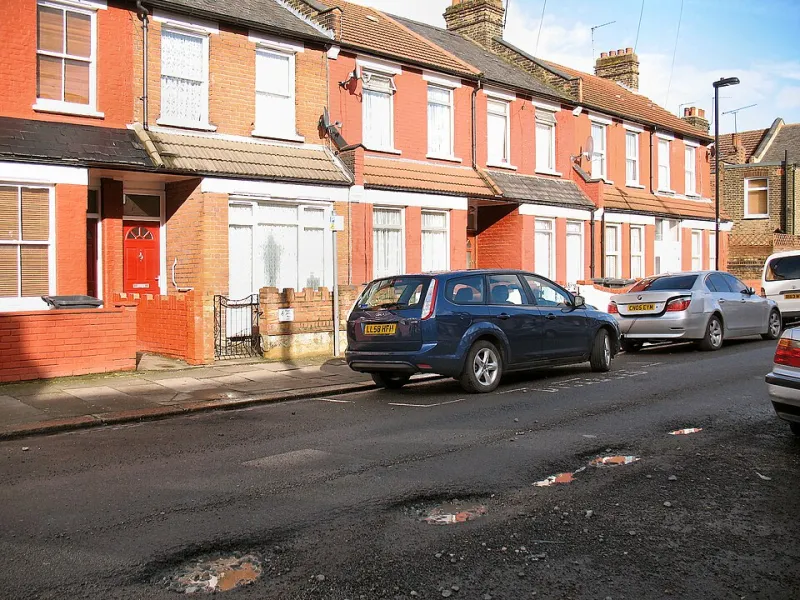
Birmingham's housing stock wasn't designed with cycling in mind. Rows of Victorian terraces in Moseley, Sparkbrook, and Erdington typically have no front garden to speak of, a narrow side passage at best, and a back yard that's already doing double duty as a drying area, bin store, and occasional barbecue venue. Modern flats — and there are thousands going up across the city right now — often have communal bike stores that are either perpetually full, chronically insecure, or both.
The council's record on residential bike storage is patchy at best. There have been schemes, consultations, and pilot programmes, but provision remains inconsistent and the application processes for things like on-street bike hangar installations can feel deliberately labyrinthine. Meanwhile, bike theft in Birmingham continues to be a significant deterrent to cycling uptake, with many riders reporting that a single theft was enough to put them off for years.
"I had two bikes nicked in eighteen months," says Priya, a nurse who cycles from Stirchley to the QE Hospital. "Both from inside communal areas that were supposedly secure. After the second one I nearly gave up entirely. Instead, I spent a Saturday on YouTube and built a lockable timber box in my back yard for about £180. It's not pretty but it's mine and nothing's been touched since."
The Communal Shed Renaissance
Priya isn't alone, and increasingly, people aren't just solving the problem for themselves — they're solving it for their neighbours too.
In Bournville, a small group of residents on a council-managed estate coordinated through a local Facebook group to petition their housing association for a communal bike shed. When the response came back as a vague promise of "future consideration," they raised the money themselves through a combination of a GoFundMe campaign and a grant from a local community foundation. The shed — a proper timber structure with individual locking points and a coded access door — now serves fourteen households.
"It took us about eight months from the first conversation to the first bike going in," says Marcus, one of the organisers. "The housing association eventually gave us permission to use a corner of the car park, which was genuinely helpful, but beyond that we were on our own. We did the fundraising, sourced the shed, arranged the installation. It's ours."
This model is cropping up across the city. WhatsApp groups, Nextdoor threads, and cycling club networks are increasingly becoming the infrastructure through which people find neighbours willing to share a solution. Some setups are elaborate; others are as simple as two households agreeing to share a back-yard anchor point and a chain.
What the Bike Shops Are Seeing
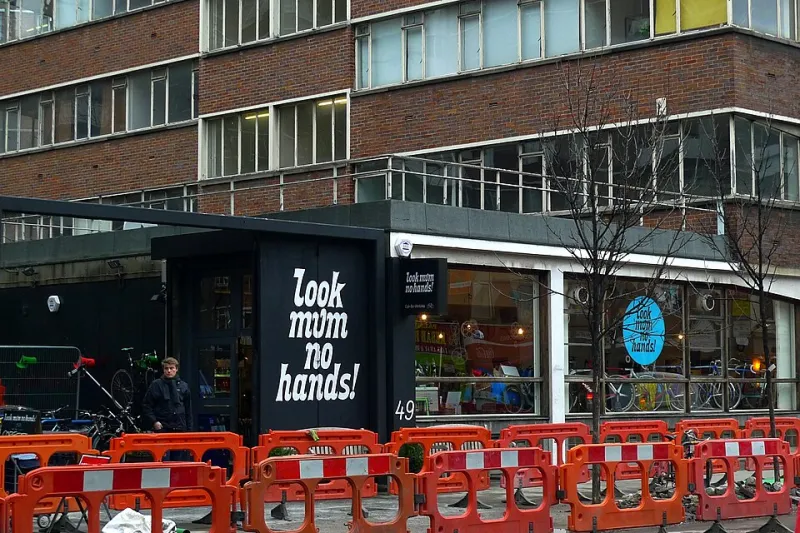
Independent bike shops have become unlikely hubs of storage knowledge. Several around Birmingham report a steady uptick in customers coming in not to buy bikes or accessories, but to ask about locks, ground anchors, and shed security.
"We've started keeping a small range of storage hardware in stock because the demand is real," says the owner of one shop in Kings Heath who's been trading for over a decade. "People come in and they're not just asking what lock to buy — they're asking how to build a whole system. We end up having half-hour conversations about ground anchor placement and shed ventilation. It's not what I trained for but it matters."
Some shops have gone further, partnering with local cycling groups to run informal 'bike storage workshops' — practical sessions where cyclists can learn about options, costs, and installation. It's the kind of joined-up community thinking that arguably should be coming from somewhere with a budget and a mandate, but isn't.
The Inequality Angle Nobody Talks About Loudly Enough
There's something worth sitting with here, because the DIY storage revolution — admirable and creative as it is — isn't available to everyone equally.
Spending £180 on a timber box, or raising £1,500 for a communal shed, requires disposable income, time, and a secure enough housing situation to justify the investment. Renters in privately let properties often can't modify their homes at all. People in temporary accommodation, or those living in high-density blocks without access to shared outdoor space, have no equivalent option.
For these cyclists — who are often the people with the most to gain from reliable, affordable active travel — the storage problem remains completely unsolved. And that's a genuine equity issue, not just an inconvenience.
"The people I worry about are the ones who can't do what I did," says Priya. "Someone in a first-floor flat with a landlord who won't allow modifications — what are they supposed to do? Leave their bike in the living room forever? That's not a solution."
What Good Would Actually Look Like
Cycling advocates in Birmingham have been making the case for a properly funded, city-wide residential bike storage programme for years. The model exists — London boroughs have rolled out on-street bike hangars at scale, converting single car parking spaces into secure storage for multiple bikes. It works. People use them. Cycling rates in areas with good storage provision are measurably higher.
Birmingham has the density, the cycling ambition (at least on paper), and the housing stock that would benefit most. What it's lacked is the sustained political will to treat storage as infrastructure rather than an optional extra.
Until that changes, the sheds will keep going up. The WhatsApp groups will keep growing. The bike shop owners will keep giving half-hour consultations they don't charge for. And Birmingham cyclists will keep doing what they've always done — finding a way, even when the way hasn't been built for them.
It's resourceful, it's community-minded, and it genuinely works. But it shouldn't have to be this hard.