Plugged In or Sold Out? The Honest Truth About Going Electric on Birmingham's Streets
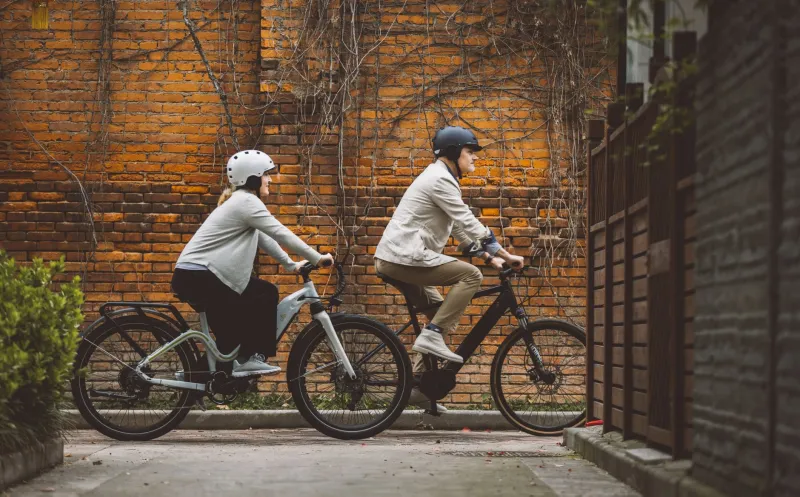
Something has shifted on Birmingham's roads. You'll notice it on the Pershore Road at half seven in the morning — a rider in office clothes, barely breaking a sweat, gliding past a lycra-clad regular who's grinding up the incline with considerably more effort. The e-bike is no longer a novelty. It's a commuter tool, a lifestyle choice, and — depending on who you ask — either the best thing to happen to cycling in this city or the beginning of something a bit more complicated.
We spent a few weeks talking to people across the spectrum: recent converts, long-term cyclists who've resisted the switch, and a couple of independent mechanics who've watched the whole thing unfold from their workshop floors. What came back wasn't a simple story.
The Convert's Case: Why People Are Switching
Take Priya, a 38-year-old NHS administrator from Moseley who started commuting by e-bike eighteen months ago after years of telling herself she'd never manage the ride to the QE Hospital on a regular bike. "I always wanted to cycle to work but the hills just killed it for me," she says. "Edgbaston is no joke at seven in the morning. The e-bike basically removed every excuse I had."
Her story isn't unusual. Birmingham's topography — often underestimated by people who've never actually tried to pedal across it — is genuinely challenging. The city isn't flat. There's a reason the canal towpaths are so popular: they offer a rare ribbon of level ground through a landscape that otherwise asks quite a lot of your legs. For people returning to cycling after years away, carrying a bit more weight, managing a health condition, or simply needing to arrive at work without requiring a shower, the assisted ride changes the calculation entirely.
Martin, a 52-year-old from Erdington who switched after a knee injury, puts it bluntly. "I was either going to drive or get an e-bike. There wasn't a third option for me. I'm back on a bike every day now. Surely that's a good thing?"
From a pure numbers perspective, it's hard to argue. Every e-bike commuter is one fewer car on roads that are already struggling. That has to count for something.
The Cost of Entry — And the Ongoing Bill
Here's where it gets thornier. A decent entry-level e-bike — something reliable enough to handle Birmingham's roads without falling apart in six months — will set you back somewhere between £800 and £1,500. A quality mid-range option from a reputable brand? You're looking at £2,000 to £3,500. That's before you factor in a proper lock (non-negotiable in this city), insurance, and the not-insignificant cost of battery replacement down the line.
Batteries are the hidden long-term expense that doesn't get talked about enough. Most will degrade noticeably after three to five years of regular use, and replacement units can run to £400–£700 depending on the model. The Cycle to Work scheme helps — and if you haven't looked into it through your employer, you really should — but it doesn't eliminate the gap between what an e-bike costs and what a solid secondhand acoustic bike costs.
For mechanics like Dave, who runs a small independent workshop in Stirchley, the economics have created a visible divide in his customer base. "I've got people spending £150 getting a vintage steel bike back on the road, and people spending £300 on a single e-bike service. They're essentially different markets now. Different bikes, different expectations, different riders."
He's not complaining — the e-bike work keeps his workshop busy — but he's noticed something else. "The cheaper end of the e-bike market is a nightmare for parts. Some of these budget motors and proprietary batteries, you just can't get the components. People are buying £900 e-bikes and they're essentially disposable after a few years. That's not great for anyone."
The Culture Question: Are We Splitting in Two?
This is the conversation that tends to make people uncomfortable, but it's worth having. Birmingham's cycling community has always been broad — commuters, club riders, leisure cyclists, kids on BMXs, older riders rediscovering their legs. E-bikes are adding another layer to that mix, but some long-standing riders feel the dynamic is shifting in ways that aren't entirely comfortable.
"I've got nothing against e-bikes," says Jonah, a regular on the Sunday morning club runs out of Sutton Coldfield. "But there is a thing where someone turns up on an e-bike and then sets the pace for everyone else, and it just changes the feel of the ride. You're not working together anymore — you're just following a motor."
It's a niche complaint, admittedly, and most group riding communities have adapted. Many have simply introduced separate e-bike rides or adopted a no-assist policy for certain routes. But the underlying tension points to something real: cycling has always carried a quiet culture of effort, of earning the view from the top of the hill. E-bikes don't erase that culture, but they do complicate it.
On the other side of that argument is Fatima, who joined a women's cycling group in Handsworth earlier this year — her first time on a bike in over a decade. "I would never have come along on a regular bike. I'd have been at the back, embarrassed, probably not come back. The e-bike let me keep up, have actual conversations, enjoy it. Now I'm thinking about getting a non-assisted bike for shorter rides. It brought me in."
That pathway — e-bike as gateway rather than destination — is probably the most optimistic version of this story, and it does seem to be playing out for some riders.
What Birmingham's Terrain Actually Does to Your Range
One practical thing worth knowing if you're considering the switch: range estimates on e-bikes are almost always calculated on flat terrain, and Birmingham is not flat terrain. Manufacturers might quote 60–80 miles on a full charge; in reality, if you're doing the kind of climbing involved in getting from Bournville to the city centre and back, you're going to see that figure drop significantly, especially in cold weather when battery performance dips anyway.
Most experienced e-bike commuters in the city report real-world ranges of 25–45 miles depending on assist level, temperature, and how hilly their route is. That's still more than enough for a daily commute, but it's worth calibrating your expectations before you buy.
The Verdict — If There Is One
The honest answer is that e-bikes are doing genuinely useful work in Birmingham. They're bringing people back to cycling who'd written it off. They're making the commute viable for people who live in the hillier parts of the city. They're keeping older riders on the road longer.
But they're not a silver bullet. The cost barrier is real, and it does mean that the people most likely to benefit from cheaper, healthier commuting are often the least able to access e-bikes. The environmental picture is murkier than the marketing suggests, particularly around battery disposal and the carbon cost of manufacture.
And the culture question isn't going away. Cycling in Birmingham has always been about more than getting from A to B — it's been about community, shared effort, a certain stubborn joy in doing something under your own steam. E-bikes don't threaten that, but they do ask us to think about what we actually value and who we want cycling to be for.
Maybe the answer is: everyone. And if that means accepting a bit of complexity, a bit of tension, and the occasional slightly smug overtake on the Pershore Road — well, we've dealt with worse.