Same Roads, Different Worlds: Can Birmingham's Cyclists and Drivers Finally Stop Fighting?
Photo: PattayaPatrol, CC BY-SA 4.0, via Wikimedia Commons
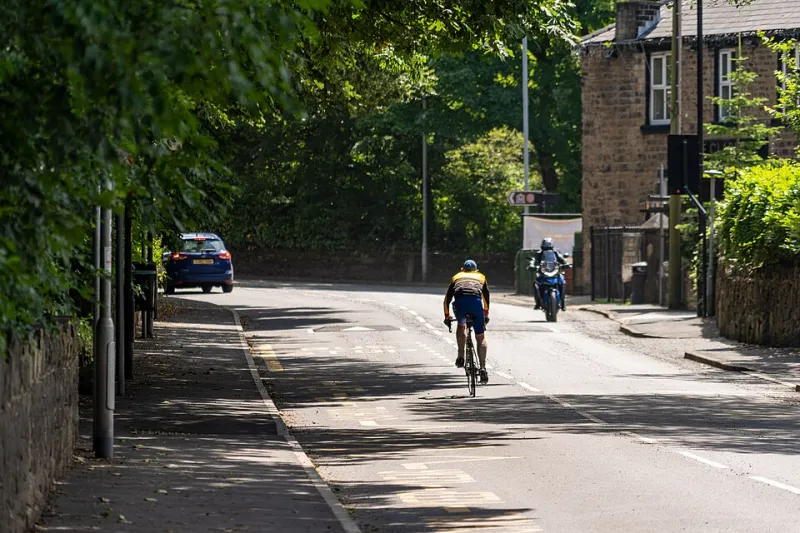
Picture the Pershore Road at half eight on a Tuesday morning. Traffic is backed up past the Edgbaston boundary. A cyclist filters to the front at the lights. A van driver leans on the horn. Someone on a bike shouts something that probably isn't a greeting. The lights change, and everyone disperses into their separate grievances, carrying them all the way to work.
It's a scene that plays out across Birmingham's arterial roads every single morning — on the Stratford Road, the Coventry Road, the Bristol Road, and a dozen other routes that funnel thousands of people into the city centre simultaneously. And it raises a question that's easy to dismiss as naïve but is actually worth taking seriously: does this have to be this way?
The short answer, supported by both behavioural research and the lived experience of people who navigate these roads daily, is no. But the longer answer involves being honest about what's actually driving the conflict — and resisting the temptation to reach for the most satisfying villain.
The Blame Game Doesn't Get Anyone Home Faster
Let's be clear from the start: this isn't a piece about who's right and who's wrong. If you're here for validation of your existing position — whether you're a cyclist who's been cut up one too many times or a driver who's convinced that cyclists are a law unto themselves — you might find this a bit uncomfortable. Good.
The reality on Birmingham's roads is that bad behaviour exists on both sides, and that framing the issue as cyclists versus drivers is one of the main reasons nothing changes. It's a framing that suits the culture war, but it doesn't suit the actual problem, which is fundamentally about road design, traffic density, and the way stress degrades human decision-making.
"When you're in a car stuck in traffic, you're already in a heightened state," explains Dr Rachel Osei, a transport psychologist who has studied commuter behaviour in UK cities. "Add in someone who appears to be moving freely past you — which is what a filtering cyclist looks like from inside a stationary vehicle — and you've got a psychological trigger that has nothing to do with logic."
That's not an excuse for dangerous driving. It's an explanation. And explanations, unlike excuses, are actually useful.
What the Research Says About Road Conflict
Studies consistently show that the majority of conflict between cyclists and drivers isn't rooted in malice — it's rooted in mutual ignorance. Drivers who have never cycled in urban traffic tend to significantly underestimate how vulnerable a cyclist is and how much space they need. Cyclists who have never driven a large vehicle tend to underestimate blind spots and the genuine difficulty of anticipating a cyclist's next move from inside a cab.
A study from the Transport Research Laboratory found that conflict incidents dropped substantially when drivers had even basic cycling experience, and when cyclists understood more about how their behaviour appeared from inside a vehicle. This isn't about victim-blaming. It's about the fact that empathy is easier when you've actually stood in someone else's position — or sat in their seat.
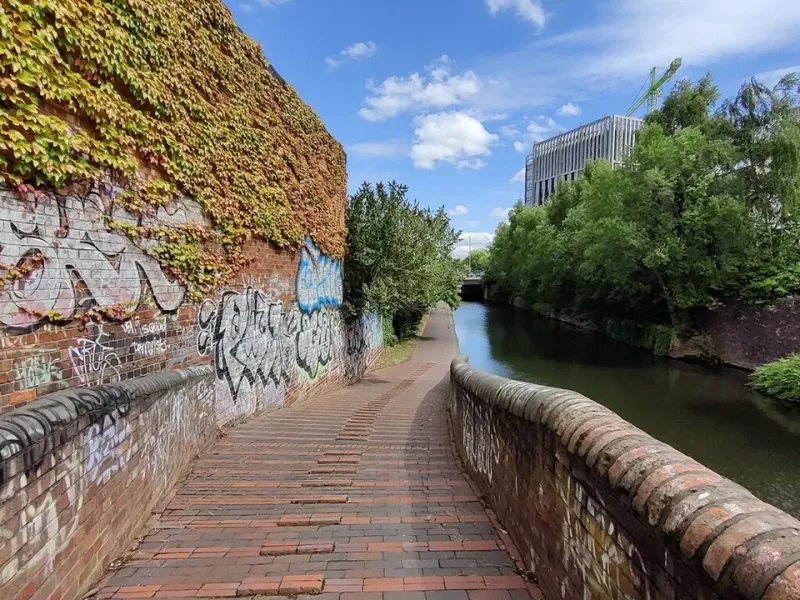
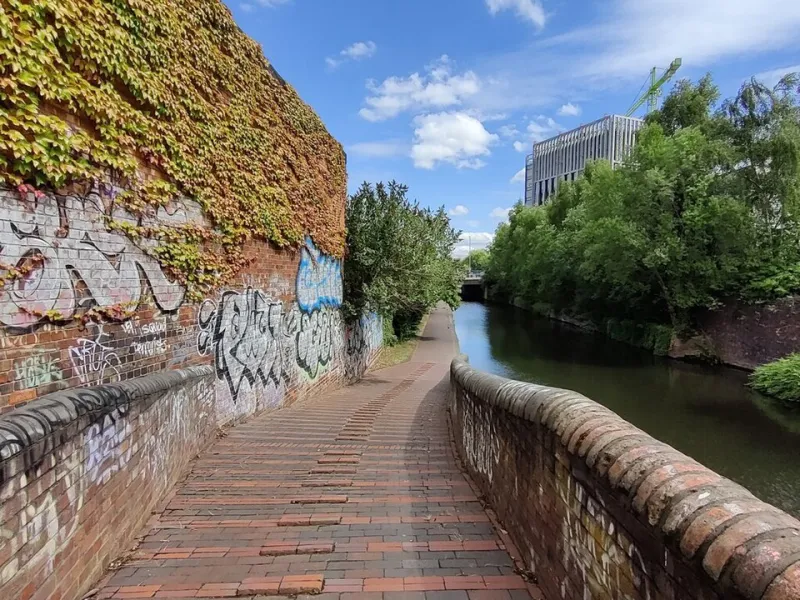
Birmingham's road network compounds this. Many of the city's busiest commute corridors were designed in an era when the car was the unquestioned priority. Cycle lanes that vanish at junctions, pinch points that force cyclists and vehicles into the same narrow channel, and a near-total absence of protected infrastructure on key routes means that conflict isn't just possible — it's structurally engineered in.
The Specific Flashpoints on Birmingham's Roads
Talk to regular cyclists in Birmingham and the same locations come up repeatedly. The junction of Broad Street and Five Ways. The stretch of the A34 through Perry Barr. The approach to the Queensway underpass. These aren't random hotspots — they're places where infrastructure failure forces close interaction between fast-moving vehicles and vulnerable road users, usually at exactly the wrong moment in the journey.
"There's a section of my commute where the cycle lane just ends," says Delroy, who rides from Handsworth to the city centre five days a week. "You go from having your own space to suddenly being in the gutter with lorries passing at 40 miles an hour. Of course people are stressed. Of course there's aggression. The road is telling everyone there isn't room."
That physical message — there isn't room — is the root of most of the tension. When roads are designed to accommodate only one type of user comfortably, everyone else becomes an obstacle rather than a fellow traveller.
What Actually Works: Solutions Beyond the Shouting
The good news is that we're not short of evidence about what reduces conflict. The bad news is that most of it requires political will and sustained investment rather than a viral social media campaign.
Protected cycle infrastructure — lanes physically separated from motor traffic — is the most consistent factor in reducing conflict and improving safety outcomes. Cities that have invested in it, from Amsterdam to, increasingly, parts of London, see both cyclist numbers rise and serious incidents fall. Birmingham's cycling infrastructure has improved in pockets, but the network remains fragmented. A protected lane that deposits you into a junction with no provision isn't a solution; it's a false promise.
Beyond infrastructure, there's a growing body of evidence supporting mutual awareness programmes — driver training that includes genuine cycling experience, and cycling proficiency work that addresses urban traffic realities rather than just the basics. These aren't glamorous interventions, but they shift something real.
On a more immediate level, there are behavioural changes that both groups can make without waiting for the council. For drivers: give cyclists the full width of a car door when passing, don't park in cycle lanes (yes, even briefly), and treat a cyclist at a junction as you'd treat a slow-moving vehicle rather than an obstacle. For cyclists: make your intentions readable — signal clearly, make eye contact where you can, and try not to disappear into a driver's blind spot without warning.
None of this is revolutionary. Most of it is just the Highway Code, applied with actual thought.
The Bigger Picture
Birmingham is a city in genuine transition. The Clean Air Zone, the ongoing investment in active travel infrastructure, and the generational shift in how younger people think about car ownership are all pointing in the same direction. More people cycling is not a niche lifestyle preference — it's part of how this city manages its air quality, its congestion, and its public health.
That means the question of how cyclists and drivers share the road isn't a minor squabble. It's a question about what kind of city Birmingham wants to be, and who gets to feel safe moving through it.
The shouting on the Pershore Road isn't going to resolve that. But better infrastructure, genuine mutual understanding, and a political culture that stops treating cycling as a special interest rather than a mainstream transport choice might — over time — make Tuesday morning feel a little less like a battle.
We're not there yet. But the road exists.