Steel, Smoke, and Spokes: How Birmingham's Industrial Bones Are Becoming Its Cycling Future
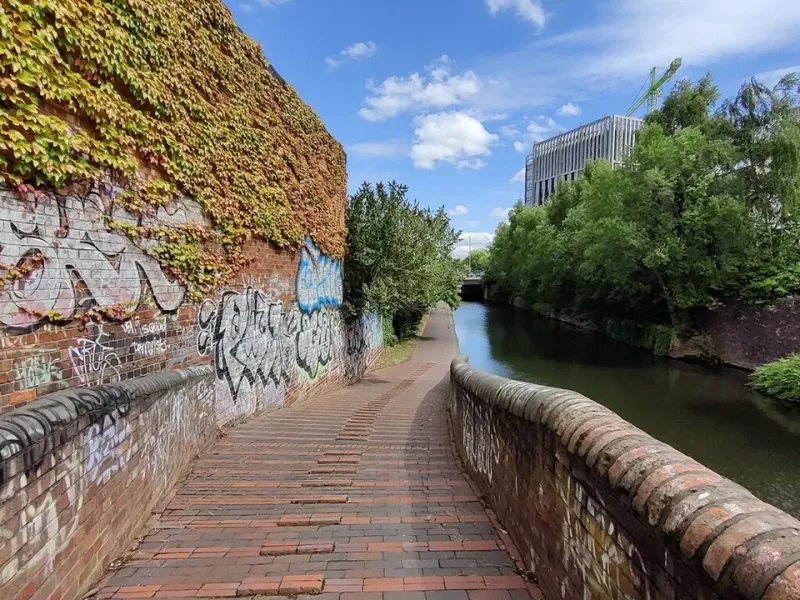
Photo: Mat Fascione , CC BY-SA 2.0, via Wikimedia Commons
There's a particular kind of magic in riding a stretch of smooth tarmac where locomotives once thundered, or gliding along a canal towpath that once groaned under the weight of coal barges. Birmingham is a city that made the modern world, and now — slowly, imperfectly, but genuinely — it's making something else: a cycling network built from the ruins of its industrial past.
For too long, the conversation about cycling infrastructure in Birmingham has been framed around what the city lacks. And yes, the gaps are real. But a quieter, more interesting story is unfolding in the cuttings and corridors between the ring road and the suburbs. Urban planners, community groups, and local cyclists are looking at Birmingham's Victorian infrastructure not as a liability, but as a blueprint.
The Disused Railway Lines Nobody Talks About
Birmingham once had one of the densest railway networks in the world. Most of it is gone now — ripped up during the Beeching cuts of the 1960s — but the earthworks remain. Embankments, cuttings, and viaducts still carve through the city's fabric, often invisible to anyone who isn't specifically looking.
The Rea Valley Route is probably the most talked-about example of this kind of thinking. Running south from the city centre towards Cannon Hill Park and beyond, it threads together green space and former industrial land into something genuinely usable. But planners and advocates say it's just the beginning.
"There are corridors across Birmingham that have been sitting there for decades," says Marcus Webb, a transport planner who has worked on active travel projects across the West Midlands. "They're not glamorous. Some of them are overgrown, fly-tipped, completely off the radar. But the geometry is perfect. Flat, direct, already separated from traffic. You couldn't design a better cycling route if you tried."
The challenge, as ever, is funding and political will. Repurposing a disused railway line sounds straightforward until you encounter fragmented land ownership, drainage issues, and the sheer cost of surfacing kilometres of forgotten infrastructure. But with active travel funding increasingly tied to deliverable projects, these corridors are attracting serious attention.
Digbeth and the Creative Quarter Connection
If you want to see what happens when cycling infrastructure meets post-industrial regeneration, Digbeth is your case study. Birmingham's creative quarter — all exposed brick, independent venues, and arts spaces — sits on land that was once the beating industrial heart of the city. The River Rea runs through it, more or less invisibly, buried under decades of development.
Recent proposals have explored opening up the Rea corridor as a continuous cycling and walking route connecting Digbeth to the wider Rea Valley greenway. It's the kind of project that sounds obvious in retrospect: take a neglected waterway, clean it up, put a decent surface alongside it, and suddenly you've got a traffic-free connection from the city centre to the suburbs.
Local cyclist Priya Nair, who commutes from Kings Heath to Digbeth most mornings, is cautiously optimistic. "I've been riding this city for six years and I've watched the conversation shift," she says. "There's more ambition now. Whether it translates into actual tarmac is another question, but at least people are imagining it."
Priya's current route involves a combination of quiet roads, the towpath along the Grand Union Canal, and what she diplomatically describes as "some creative pavement use" near the Custard Factory. A properly connected Rea route would, she reckons, cut ten minutes off her commute and remove the one genuinely hairy junction that still makes her nervous every morning.
Canal Towpaths: Brilliant in Theory, Complicated in Practice
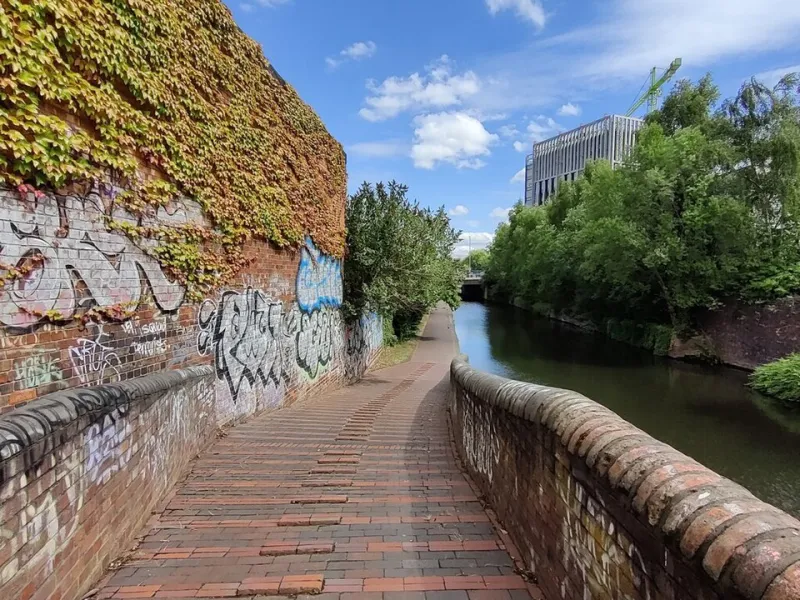
Birmingham's canal network is extraordinary. More miles of canal than Venice, the tourist brochures used to say, though that comparison has been quietly retired. What's undeniable is that the towpaths represent a ready-made cycling network — flat, traffic-free, and connecting neighbourhoods that are otherwise separated by busy roads.
The reality is more nuanced. Towpath surfaces vary wildly. Some stretches are beautifully maintained; others are a pothole-strewn, puddle-filled obstacle course that would test a mountain bike. Shared use between cyclists and pedestrians creates friction, particularly on narrower sections. And the network, while extensive, doesn't always go where people need to go.
Canal & River Trust, which manages the towpaths, has been working to upgrade key sections, and there's been genuine progress. But advocates argue that the pace needs to accelerate and that investment decisions need to be driven by where people actually want to travel, not just where the towpaths happen to run.
"The canals are an incredible asset," says Webb. "But we shouldn't treat them as a substitute for proper cycling infrastructure on the roads. They're a complement, not a replacement. The city needs both."
The Longer Vision: A Network, Not Just Routes
What's becoming clear, talking to planners and cyclists across Birmingham, is that the most exciting projects aren't individual routes — they're the connections between them. A disused railway corridor that links to a canal towpath that connects to a greenway through a former industrial estate starts to look less like a collection of interesting oddities and more like a genuine network.
West Midlands Combined Authority's cycling and walking investment plans gesture towards this kind of thinking, though the gap between strategic vision and delivered infrastructure remains frustratingly wide. The city's industrial geography — all those flat corridors, those wide rights-of-way, that legacy of movement built into the landscape — gives Birmingham advantages that more picturesque cities simply don't have.
The irony isn't lost on anyone. The same industrial logic that once prioritised the movement of goods over the wellbeing of communities is now, reimagined and repurposed, potentially offering those communities something genuinely useful: a way to move through the city that doesn't involve sitting in traffic or breathing diesel.
Birmingham made things here. It still can. And increasingly, what it's making — slowly, imperfectly, but with growing ambition — looks a lot like a city worth riding through.