Cinder Tracks and Green Shoots: The Post-Industrial Parks Quietly Becoming Birmingham's Best Rides
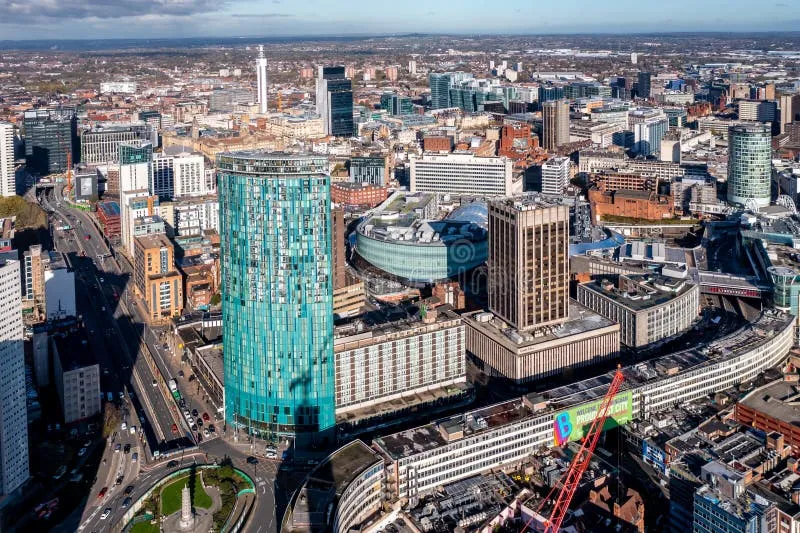
Photo: Birmingham brownfield regeneration cycling path industrial landscape UK, via thumbs.dreamstime.com
Birmingham has never been shy about its industrial past. The city wore its manufacturing heritage like a badge of honour — the foundries, the forges, the endless hum of metal on metal. But as those industries faded, they left something behind: vast, awkward parcels of land that planners didn't quite know what to do with. For years, that meant fences, fly-tipping, and the occasional planning application that went nowhere.
Something is changing, though. Across the city, brownfield regeneration projects are quietly stitching together a new kind of cycling landscape — one that's rawer, stranger, and frankly more interesting than anything you'd find on a glossy cycling map.
The Landscape Nobody Talked About
Ask most Birmingham cyclists where they ride and you'll hear the same handful of answers: the canal network, Sutton Park, the Rea Valley route. All brilliant, all worth your time. But scratch beneath the surface and a different conversation starts to emerge.
"I stumbled across the old Longbridge site on a Sunday morning a couple of years back," says Marcus, a 34-year-old who commutes by bike from Northfield. "There were these wide, flat paths through what used to be the Rover plant grounds — proper smooth tarmac, almost no traffic, and this eerie industrial backdrop that made it feel like you were riding through a film set. I went back three weekends in a row."
That sense of discovery is part of what makes these spaces compelling. They weren't designed with cyclists in mind, at least not initially. But the combination of wide remediated ground, relatively flat terrain, and low footfall has made them quietly magnetic for riders looking for something a bit different.
Regeneration With Two Wheels in Mind
The picture is shifting, though. Some of Birmingham's most ambitious regeneration projects are now explicitly incorporating cycling infrastructure from the ground up rather than bolting it on as an afterthought.
Tyburn Road's industrial corridor has seen several brownfield plots converted into green corridors that connect residential areas to employment zones, with dedicated cycling paths threaded through what were once contaminated factory grounds. The planners involved will tell you it wasn't a straightforward process — remediating land that has decades of industrial residue baked into it is expensive and complicated — but the results are starting to show.
Samira, a community activist who's been involved in the regeneration of a former metalworks site in the Nechells area, describes the shift in thinking. "Five years ago, the conversation was entirely about housing numbers and commercial square footage. Cycling was almost an afterthought. Now, when we sit down with developers and the council, active travel is on the agenda from day one. It's not perfect, but it's genuinely different."
That shift matters enormously for Birmingham's cycling scene. The city's topography — more varied and hilly than many assume — means that flat, accessible routes are genuinely valuable. Former industrial sites, often built on levelled ground near waterways, offer exactly that.
The Hidden Gems Worth Seeking Out
So where should you actually be riding? Without turning this into an exhaustive route guide, a few areas stand out as particularly rewarding.
The Tame Valley corridor, running through what was once a heavily industrialised stretch of north Birmingham, has seen significant investment in green infrastructure over the past decade. The cycling paths here weave through reclaimed wetland and former factory sites, with the river providing a constant companion. It's not always perfectly surfaced — bring tyres with a bit of volume — but the sense of riding through a landscape in the process of healing itself is genuinely moving.
Further south, the ongoing transformation of the Bordesley area around the old Typhoo Tea factory and surrounding industrial plots is producing something interesting. New residential development has brought with it a network of shared paths that, if you know how to link them up, provide a surprisingly pleasant off-road route between Digbeth and Small Heath. Again, it's not signposted as a cycling destination. You have to find it yourself. But that's half the appeal.
The former GKN site near Erdington is another one to watch. Remediation work has been underway for several years, and early indications suggest that the masterplan includes a significant green corridor connecting to the wider Sutton Park trail network. If it delivers on its promise, it could become one of the most significant new cycling routes in the north of the city.
What's Still Being Left on the Table
For all the progress, it would be naive to pretend that Birmingham is getting this right consistently. There are still brownfield sites across the city where the cycling potential is being squandered — either through poor planning decisions, developer indifference, or simple lack of ambition.
"The frustration," says Priya, who volunteers with a local cycling advocacy group, "is that the opportunity only comes around once. Once a site is developed without proper cycling infrastructure, you're not going back to retrofit it for a generation. We need to be much more aggressive about making the case at the planning stage."
She's right. The window to embed cycling into Birmingham's regenerating industrial landscape is open now, but it won't stay open forever. As development pressure increases and brownfield sites become increasingly valuable, the temptation to maximise residential and commercial density at the expense of active travel space will only grow.
The city's emerging transport strategy talks a good game about active travel, but talk needs to translate into planning conditions with teeth — requirements that new developments on former industrial land contribute meaningfully to the cycling network, not just provide a token shared path that leads nowhere useful.
Riding the City's Memory
There's something else worth saying about these spaces that goes beyond the purely practical. Riding through Birmingham's regenerated industrial sites is, in its own way, an act of engagement with the city's history. The cinder paths, the surviving brick walls, the occasional piece of machinery left as a heritage feature — they tell a story about what this place was and how it's changing.
For a city that sometimes struggles to articulate its own identity to outsiders, that matters. Birmingham's cycling culture has always been rooted in the everyday, in the practical, in the unglamorous business of getting around a complicated city. These post-industrial parks fit that spirit perfectly. They're not picturesque in a conventional sense. They're interesting, which is better.
Get out and find them before everyone else does.