Rush Hour, Dead Ends: Why Birmingham's Cycling Network Quietly Falls Apart When Commuters Need It Most
There's a particular kind of frustration reserved for Birmingham cyclists who commute by bike. It's not the hills, the weather, or even the close passes — though those are all very real. It's the slow, grinding realisation that the infrastructure you're supposed to rely on was never quite built with you in mind.
On a Sunday morning, Birmingham's cycling routes can feel genuinely promising. The towpaths are clear, the painted lanes are visible, the signage makes sense. You start to think: yes, this city is getting somewhere. Then Monday arrives.
The Sunday Test vs. The Monday Reality
Ask any regular cycling commuter in Birmingham and they'll tell you the same thing. Safia, who rides from Erdington to the city centre five days a week, puts it bluntly: "I've done leisure rides where I thought the infrastructure was actually decent. Then I tried using the same routes at eight in the morning and it was a completely different experience. Lorries parked across the lane on Aston Road, the crossing at the junction near the Expressway completely backed up. It's like the route designers only ever tried it on a quiet afternoon."
That gap — between how infrastructure performs under low-pressure conditions and how it holds up during peak demand — is at the heart of what's going wrong. And it's not unique to Birmingham, but the scale of the problem here feels particularly acute for a city that's been talking up its cycling ambitions for years.
Blocked Lanes and Broken Promises
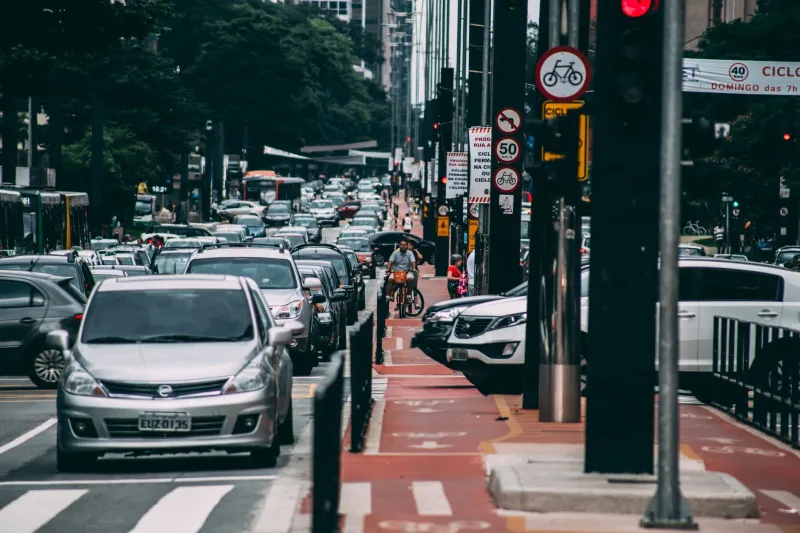
Cycle lanes that double as loading bays. Signalised crossings timed for car throughput rather than cyclist flow. Shared-use paths that funnel both pedestrians and bikes into a bottleneck at precisely the moment when both are at their busiest. These aren't freak occurrences — they're recurring, predictable failures that happen every single weekday.
Marcus, a traffic engineer who's worked on road schemes across the West Midlands and asked to remain anonymous, is candid about the underlying issue. "A lot of these routes were designed to hit a target — a kilometre of protected lane, a new crossing — rather than to function as a coherent network. The metrics get hit, the funding gets signed off, and then nobody's really monitoring whether it works in practice."
That word — network — is crucial. A cycling route that's excellent in isolation but connects to nothing, or that deposits you into an unprotected junction at exactly the wrong moment, isn't really infrastructure at all. It's a gesture.
The Timing Problem Nobody Talks About
One of the least-discussed but most maddening issues is signal timing. Across Birmingham, traffic light sequences at key junctions are calibrated — sometimes quite deliberately — to keep motor traffic moving during peak hours. Cyclists, who require longer crossing times and more cautious gap judgements, often find themselves squeezed into whatever's left over.
Jon, who commutes from Kings Heath into Digbeth, has clocked the timings at several junctions on his regular route. "There's one crossing where I get about twelve seconds to clear a four-lane road. Fine when it's quiet. At rush hour, with buses pulling out and taxis cutting across, twelve seconds isn't enough. I've raised it with the council twice. Nothing's changed."
When we put this to a spokesperson from Birmingham City Council's transport planning team, the response was measured but telling: cycle infrastructure is reviewed periodically, and signal timings are assessed as part of broader junction assessments. Which is another way of saying: not specifically, not frequently, and not with cyclists as the primary concern.
Is This Oversight or Design Failure?
The honest answer is probably both, and that's what makes it so difficult to fix.
Some of the problems are genuine oversights — things that would have been caught if the routes had been properly tested by actual commuters during actual rush hours before they were signed off. Others are more systemic. Birmingham's cycling infrastructure has largely been retrofitted onto a road network designed entirely around motor traffic. The bones of the city — wide arterial roads, complex multi-lane junctions, dense inner-city streets — were never laid out with bikes in mind, and no amount of paint or signage fully resolves that.
There's also a funding reality that advocacy groups are increasingly vocal about. Transport for West Midlands and Birmingham City Council have both faced significant budget pressures in recent years. Infrastructure that's cheap to install — a painted lane, a shared-use designation — tends to get prioritised over the expensive, properly engineered stuff that would actually work. The result is a network that looks better on a map than it functions on the ground.
What Commuters Can Actually Do
It would be easy to end here in a state of resigned frustration, but there are practical things Birmingham cyclists can do to push back.
First: document everything. If a lane is regularly blocked, photograph it — date, time, location. If a junction feels dangerous, log it. Organisations like Cycling UK and local groups such as Birmingham Cycling Revolution compile this kind of evidence and use it in formal submissions to the council. Individual complaints get filed; patterns of complaints get acted on.
Second: engage with consultation processes when they happen. Birmingham cyclists have a reasonable track record of showing up when it matters — the response to various transport consultations in recent years has been substantial. Keep doing it. Attend local area committee meetings. Make noise.
Third: connect with other commuters on your route. Shared experiences carry more weight than isolated ones, and there's something genuinely useful about knowing which junctions other people find dangerous, which lanes are reliably blocked, and where the unofficial workarounds are. The Birmingham Cyclist community on social media is a decent starting point.
The City We Could Have
None of this is to say Birmingham's cycling future is hopeless. Parts of the canal network remain genuinely excellent for commuting — quiet, direct, and largely free from the chaos of the road. Some of the newer protected infrastructure in the city centre is a real improvement on what came before. Progress exists.
But progress at Sunday-morning pace isn't good enough for a city that wants cycling to be a meaningful part of its transport mix. The routes need to work at 8am on a wet Tuesday in November, not just on a dry Sunday in June. Until the people designing and funding this infrastructure are held to that standard — tested against real commuter conditions, real peak-hour pressures, real user feedback — the gap between what Birmingham promises its cyclists and what it actually delivers will keep widening.
And every morning, thousands of people will make the entirely rational decision to get back in the car instead.